|
For all your safety sign needsOpen till late - 0208 133 6709 |
|
|
For all your safety sign needsOpen till late - 0208 133 6709 |


 |
| Traffic signs manual chapter 8 (part 1) road works and temporary situations - design (2009) (Traffic Signs Manual) |
| Guidance for the design of temporary traffic management arrangements which should be implemented to facilitate maintenance activities or in response to temporary situations. |
 PDF DOWNLOAD PDF DOWNLOAD |
 |
| Traffic signs manual chapter 8 (part 2) road works and temporary situations - operations (2009) (Traffic Signs Manual) |
| Guidance for planning, managing, and participating in operations to implement, maintain and remove temporary traffic management arrangements. |
| PDF DOWNLOAD |
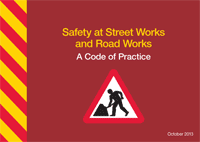 |
| Safety at Street Works and Road Works - A Code of Practice - Oct 2013 (Road Works) |
| Intended to help you to safely carry out signing, lighting and guarding of street works and road works on all highways and roads, except motorways and any dual carriageways with a speed limit of 50 mph or more |
| PDF DOWNLOAD |
 Safety Signs - Owned and Operated by BCW Office Products LTD registration 05693956, VAT 900 3466 61.
(c) 2017 BCW. Website design Crawshay Gallery / Number 6 Consulting LLC All rights reserved.